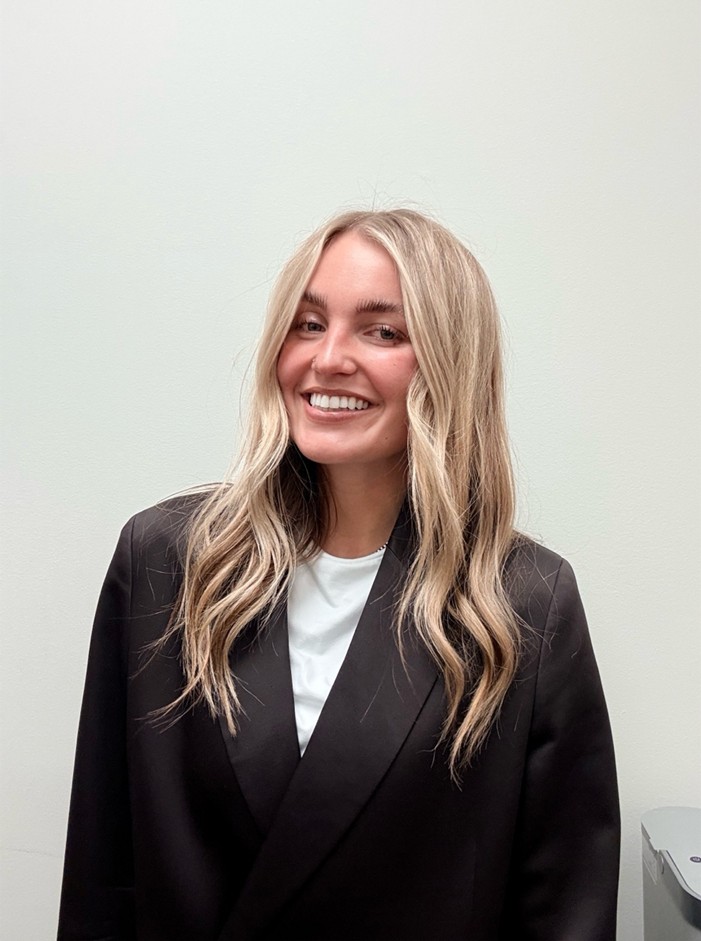
Sherry Negaard, M.S
Sherry Negaard is a University of Wyoming graduate researcher who spent the last academic year working alongside the Wyoming Telehealth Network (WyTN) at the Wyoming Institute for Disabilities to explore how different provider perspectives shape telehealth implementation across the state. Negaard is a lifelong Wyomingite and spent most of her life in Sundance. Her upbringing in small-town Wyoming played a significant role in her pursuit of medicine and fostered a deep-rooted passion for serving rural and underserved communities.
Throughout her undergraduate studies, Negaard pursued opportunities the combined modern medicine and technology to improve healthcare access in rural areas. These experiences ultimately lead her to pursue telehealth research with WyTN. Negaard supported research initiatives focused on strengthening telehealth delivery and understanding potential barriers to healthcare access throughout Wyoming.
In April Negaard successfully defended her graduate research during the quarterly Wyoming Telehealth Consortium meeting, which enabled her to earn a Master of Science in Kinesiology and Health Promotion, and graduate certificate in Community and Public Health. Negaard will continue her education this July in the Physician Assistant Studies program at Creighton University–Phoenix in Phoenix, Arizona, where she hopes to continue exploring innovative solutions to expand access to care in underserved communities.
Graduate Research Experience
As a graduate researcher, Negaard played an influential role in a large statewide study aimed at better understanding the facilitators and barriers shaping clinicians’ perceptions of telehealth across Wyoming. The study employed a mixed-methods approach, using surveys to collect data from direct-service providers across the state about their telehealth experiences, along with demographic information such as specialty, location, practice type, and years of telehealth experience. Negaard also coordinated and conducted semi-structured interviews with medical and mental health professionals across Wyoming, resulting in in-depth discussions about the factors influencing clinicians’ likelihood of adopting or continuing telehealth. Although data analysis is still in its early stages, preliminary findings suggest promising opportunities for continued telehealth expansion statewide.
Preprofessional Focus Groups – Telehealth Practice
During her junior year of undergraduate studies, Negaard developed a strong interest in creating pre-professional development opportunities for both herself and her peers. What initially began as a way to better understand admission into healthcare graduate programs evolved into a broader passion that continued throughout her master’s education. As a future clinician, Negaard became interested in understanding how exposure to telehealth during graduate training may shape students’ perceptions of telehealth and their likelihood of using it in future clinical practice.
This interest led her to collaborate with the University of Wyoming’s graduate Speech Language Pathology (SLP) program, where she worked with students to gain insight into these questions from the student perspective.
At the beginning of April, Negaard facilitated a student focus group with four first-year students from the University of Wyoming’s Speech Language Pathology (SLP) program. The approximately hour-long semi-structured discussion used questions adapted from surveys used in the larger statewide telehealth study and focused on identifying facilitators and barriers to telehealth throughout students’ graduate experiences. All participants had firsthand experience serving as lead clinicians providing telehealth services to clients in rural communities, including school-age populations and individuals receiving speech rehabilitation services. Although each student brought varying levels of experience and exposure to telehealth, all participants offered unique perspectives on how telehealth shaped their pre-professional development and clinical experiences thus far.
There were five predominant influences that strongly shaped students’ perspectives on telehealth: client demographics and environments, technology, patient rapport, support during sessions, and pre-existing perceptions of telehealth prior to the graduate telehealth experience.
Client Demographics and Environment
One of the most common themes students discussed was how client demographics and environmental factors influence telehealth success. Because the students primarily worked with school-aged children and rehabilitation clients, they noted that telehealth may be more effective for some populations than others. Students explained that distractions within classrooms or home environments can make maintaining engagement difficult, particularly among younger clients. They also noted that differences in sound quality over virtual platforms can make certain speech and voice conditions more challenging to assess remotely.
Technology
Technology was another major influence shaping student experiences. Participants discussed challenges faced by both younger clients unfamiliar with computers and older adults with limited experience using smartphones or video platforms. Technical difficulties, such as poor internet connection or camera malfunctions, also created barriers that can interrupt therapy sessions and reduce valuable treatment time. Students also highlighted concerns about clients from lower socioeconomic backgrounds’ access to technology, though some shared positive experiences in which supervisors helped clients obtain necessary equipment to improve accessibility.
Patient Rapport
Students also reflected on the challenges of building patient rapport through telehealth. Maintaining engagement and managing behaviors remotely, especially among younger children, often required greater creativity and structure than traditional in-person sessions. However, despite these challenges, students emphasized that they could still establish meaningful therapeutic relationships virtually.
Support During Sessions
Another important influence involved support provided on the client side of telehealth sessions. Students frequently discussed the value of “e-helpers,” individuals physically present with clients who assist with engagement, behavior management, and troubleshooting technology during appointments. Participants consistently described these helpers as beneficial and expressed interest in expanding similar support systems across rural communities.
Pre-Existing Perceptions of Telehealth
Lastly, students reflected on how their perceptions of telehealth prior to graduate training shaped their initial attitudes toward virtual care. Before gaining firsthand experience, all four students acknowledged misconceptions about the effectiveness of telehealth and the ability to form meaningful patient connections remotely. However, direct clinical exposure challenged many of these assumptions and demonstrated telehealth’s value as an effective healthcare delivery tool. These discussions emphasized the growing need for increased telehealth education and exposure within healthcare training programs to better prepare future clinicians for evolving models of care.
Results
These experiences collectively shaped how students viewed telehealth and influenced their likelihood of incorporating it into their future clinical practice. Despite the challenges discussed during the focus group, all participants recognized telehealth’s potential to expand access to care for rural and underserved communities. Three of the four students expressed a strong intention to incorporate telehealth into their future practices, emphasizing its importance in improving healthcare accessibility across Wyoming. One student shared:
“It is very likely I will use it in my future practice, so that I can give as much access as possible. I think that’s the most important thing, especially in Wyoming, where there’s just a lot of rural communities that don’t have access. Also, speech pathologists are generally very limited. I would be more than willing to use telehealth.”
Conclusion
As telehealth continues to evolve within healthcare delivery, the perspectives shared by these emerging clinicians underscore both its current impact and its future potential, reinforcing the importance of ongoing research, education, and training to support its use across all communities. In her future clinical practice, Negaard plans to use telehealth to help bridge systemic gaps in healthcare access, particularly for rural and underserved populations, while also aiming to positively influence both her professional peers and future clients through advocacy and education about its use.
